Somebody asked me if I’m watching something lately and I casually mentioned Pluribus. They asked me, “What is it about?” And that’s where I paused for a minute. I didn’t really know what to say.
“Oh! It’s a great show by Vince Gilligan, the creator of Breaking Bad and Better Call Saul. Need I say more?”
Or
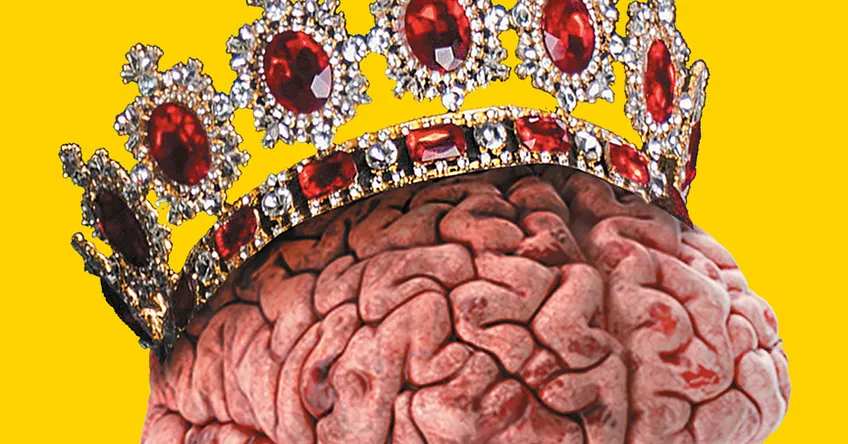
“In Pluribus, an alien pathogen spreads across Earth and links most of humanity into a single distributed consciousness, a hive mind. A small number of people are immune to the pathogen. They remain fully individual and disconnected.”
Or
“The show is trying to spark a debate around communism vs capitalism, and individualism vs collectivism. Or all of them. Or none of them. Or maybe it’s implying some anti-AI message? Honestly, we’re still trying to figure out what the show is about.”
And even then, it feels dishonest. Because the show itself doesn’t seem sure which argument it wants to make, or whether it wants to make one at all.
The truth is, Pluribus is hard to describe because it doesn’t behave like a show with a message. Every time you think you’ve understood what it’s doing, it shifts. And that’s where it becomes most interesting to me.
It doesn’t argue that one side is right and the other wrong. The hive mind isn’t clearly evil. The people who resist it aren’t clearly admirable either. The show doesn’t romanticize individual freedom as warmth or courage. It shows it as isolation, hoarding, moral exhaustion. And at the same time, within the hive mind, something essential is missing, not just freedom in the abstract, but responsibility. Choice. The ability to be wrong, to hurt others, to repair damage, to grow.
From a distance, the hive mind looks like the ultimate collectivist dream. There is abolition of private property, redistribution of resources, an end to conflict, and no inequality, and all this achieved through shared consciousness.
But the hive mind feels empty in its own way. Yes, suffering is gone. But so is choice.
Next to that, capitalism suddenly looks awkward. The immune characters still care about ownership, earning, and protecting what’s “theirs.” What once looked like independence now feels more like fear of losing control.
Pluribus isn’t telling you communism is bad and capitalism is good, or vice versa. It’s just placing both extremes on the table and asking you to sit with them. A world where nothing belongs to you. A world where everything does. And neither one feels fully human.
Personally, the idea of sharing my brain and thoughts with the world makes me deeply uncomfortable. Do I really want world peace at that cost? But more than that, giving up the freedom and ability to make choices? That’s harder to accept.
At the same time, I like the idea of living life entirely on my own terms. Absolute freedom to do or get anything. I mean, imagine living in a city with no people. Don’t I dream about that? But I also know that excitement would fade. Loneliness would hit harder than I can imagine right now. Because people need people. That’s how humans are wired. That’s how this world is supposed to work.
Collectivism vs individualism? Both work. Both fail. Just in different ways.
So when someone asks me what the show is about, I still hesitate. Because the honest answer is that it’s about how every system that promises to fix everything ends up taking something important away. And the show isn’t sure what the right trade-off is yet.
Honestly, I’m not either.
Nothing Is Yours. Everything Is Wrong.